

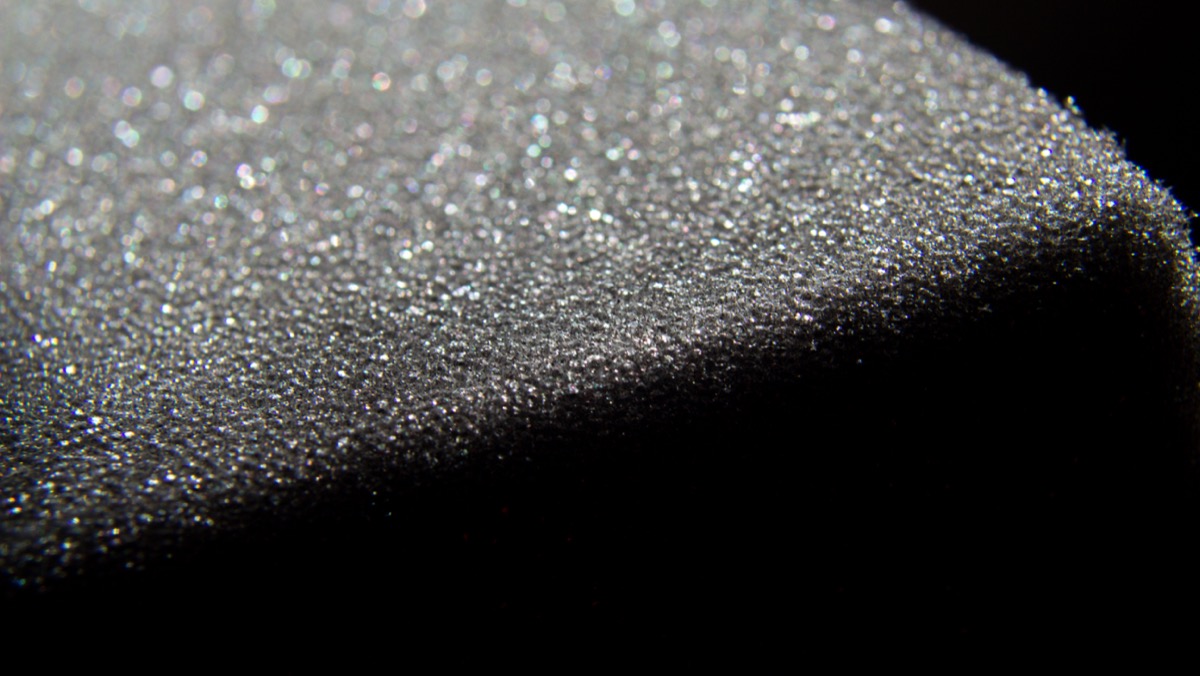
Aerogel is a synthetic ultralight material derived from a gel, in which the liquid component has been replaced with a gas. The result is a solid with extremely low density and remarkable thermal insulation properties.
How is Aerogel Made?
The production process begins with creating a gel from silicon dioxide (silica). Through a process called supercritical drying, the liquid within the gel is carefully extracted and replaced with air, preserving the original gel structure. This creates a material that is up to 99.8% air by volume.
Why is Aerogel Special?
Aerogel holds multiple world records in material science. It has the lowest thermal conductivity of any known solid, making it an extraordinary insulator. A 10mm sheet of aerogel provides the same insulation as 30-50mm of traditional materials like mineral wool or fiberglass.
Key Properties
The nanoporous structure of silica aerogel gives it several unique characteristics: ultra-low thermal conductivity (as low as 0.015 W/mK), hydrophobic surface properties, A1 non-combustible fire classification, and excellent acoustic dampening. These properties make it ideal for applications where space is limited but high insulation performance is required.
Applications
From aerospace and defense to building construction and industrial pipelines, aerogel insulation is used wherever extreme thermal performance is needed in minimal thickness. As manufacturing costs continue to decrease, aerogel is becoming more accessible for mainstream construction and industrial applications.